
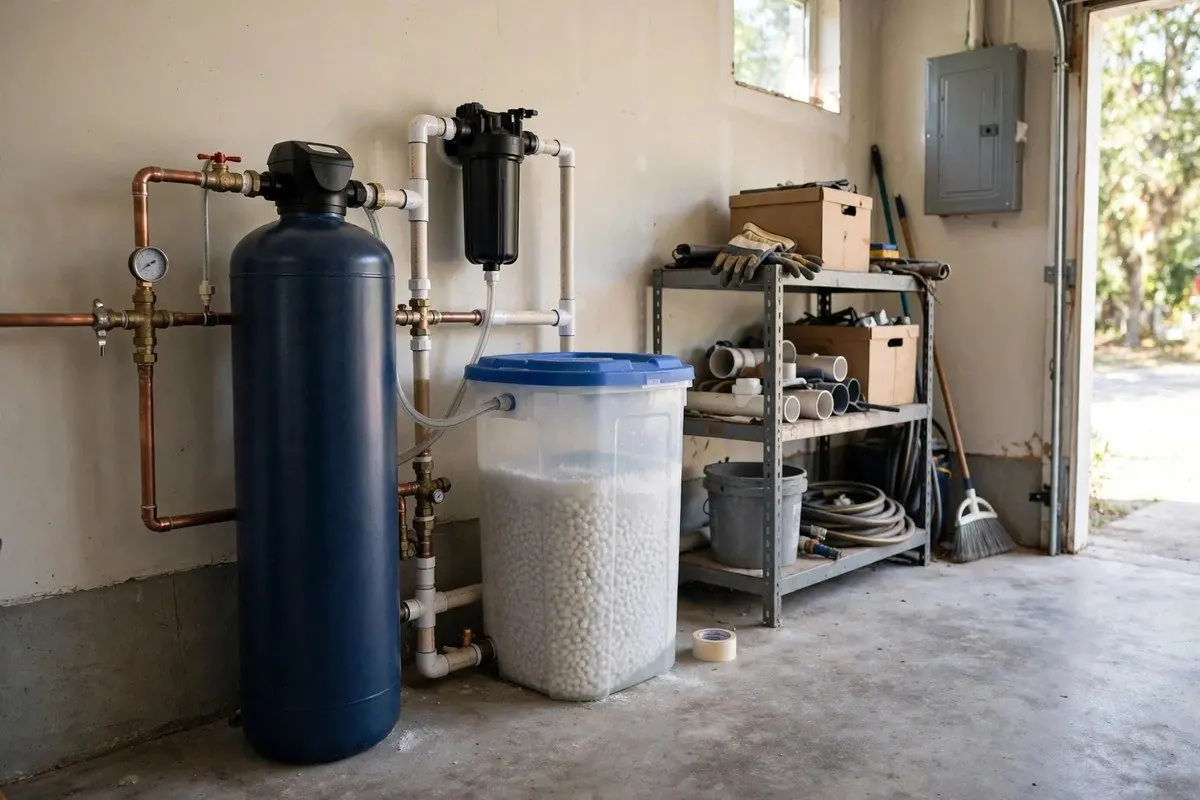
Water Softener Service in Waukegan, IL
White crust on faucets, spotted glasses and a tired water heater can all point to hard water. Before you buy any equipment, test your tap, because hardness varies from town to town.
We install and repair softeners and filters and protect equipment such as a tankless water heater from scale. We do not guess at your water, we test it.
Water softener questions answered first
It depends on your tap water. Waukegan has its own water plant on Lake Michigan, and we recommend testing your tap or asking the City for its current report before deciding.
Use a test kit or a lab test, or ask your utility for its latest consumer confidence report. We can test during a visit.
Yes. We service control heads, brine tanks, resin beds and valves. A softener that is not regenerating often has a simple fault.
Use the type the manufacturer recommends, usually solid salt pellets or blocks. Keep the brine tank clean.
Softer water reduces scale in tank and tankless heaters. The effect depends on your starting hardness.
Test first, buy second
Hardness differs across Lake County. Systems that draw from Lake Michigan share a source but treat and deliver it differently.
Clean tests tell you whether a softener is worth it. We do not recommend equipment where the data says you do not need it.
Installing a softener
We size the unit to your household and water use. The installation includes a bypass, a drain connection and a safe brine overflow.
We also check the water heater and plumbing so the softener protects what it should. Pressure and flow must suit the unit.
Call to book a water test and a straight answer.
Repair and maintenance
- Salt bridges and mushing in the brine tank.
- Failed control valves and timers.
- Resin that has worn out.
- Clogged injectors or drain lines.
We clean, repair or replace parts, and we show you what to check each month.
Softeners and the rest of your plumbing
Soft water can be gentler on fixtures, but it should not feed your outdoor faucets or drinking supply when sodium is a concern. We can set up a bypass line.
If your plumbing is old, consider repiping with a softener plan so the system lasts.
Drinking water and filtration
A softener changes minerals, but it does not filter all contaminants. If you want a drinking filter, we can add a point-of-use unit.
For lead concerns, ask the City of Waukegan about its service line inventory, and use certified filters. We explain options without selling you what you do not need.
Salt, sodium and your drinking water
A softener swaps hardness minerals for sodium or potassium. The amount added depends on how hard the water is to start with.
If someone in the household watches sodium for medical reasons, ask a doctor and consider a separate drinking tap. We can set up a bypass for the kitchen cold line when you want one.
What a softener does not do
A softener does not remove lead, bacteria, chlorine taste or most chemicals. It handles calcium and magnesium.
If you are worried about lead, ask the City of Waukegan or your village about its service line inventory, and look for a filter certified for lead. We give honest advice, even when it means you buy less equipment.
Maintenance schedule at a glance
- Check the salt level monthly and keep it above the water line.
- Break up any salt bridge with a broom handle.
- Clean the brine tank once a year.
- Test hardness after the unit runs to confirm it works.
If the test shows hard water coming out of a softener, call for service.
What affects the price of a water softener
Softener prices depend on size, brand and the install.
- Unit sizeLarger households need larger capacity.
- FeaturesEfficient valves and meters cost more.
- Plumbing changesBypass, drain and electrical work are added.
- Water testingTests and a plan are done first.
Insurance does not cover softeners. Some manufacturers offer warranties that we explain before you buy.
Standards we follow: Work follows the Illinois Plumbing Code (77 Ill. Adm. Code 890), and Illinois requires a plumbing license under 225 ILCS 320.
Want your real number? Describe the problem when you call, and we will explain what the visit involves before any work starts.