
Boiler Repair in Waukegan, IL
Many older Lake County homes still heat with a boiler and radiators. When one fails on a cold night, the house cools quickly, and pipes near exterior walls become at risk.
We repair hot water boilers, bleed radiators and replace worn parts. For gas smells, leave the house and call the gas utility first, then call us, and for domestic hot water see water heater repair.
Boiler questions answered first
Causes include a failed circulator pump, low water pressure, a bad thermostat, an ignition problem or air trapped in the system. We test each before we recommend a repair.
Air is trapped. Bleeding the radiator releases it, and we also check the system pressure.
A small drip at a valve can be scheduled. Water pooling under the boiler or hissing steam is urgent, so shut off the unit and call.
Leave the house, do not touch switches and call the gas utility or 911 from outside. We can inspect after it is declared safe.
Boilers can last decades, but an old unit with repeated repairs or a cracked heat exchanger is better replaced. We tell you honestly.
Heat out on a winter night
If the boiler stops and the house is cooling, protect the pipes first.
- Check the thermostat, the power switch and the gas valve.
- Look at the pressure gauge. It should read within the range printed on the boiler.
- Open cabinet doors to let warm air reach exterior pipes.
- Call us if the unit will not restart.
Common boiler faults
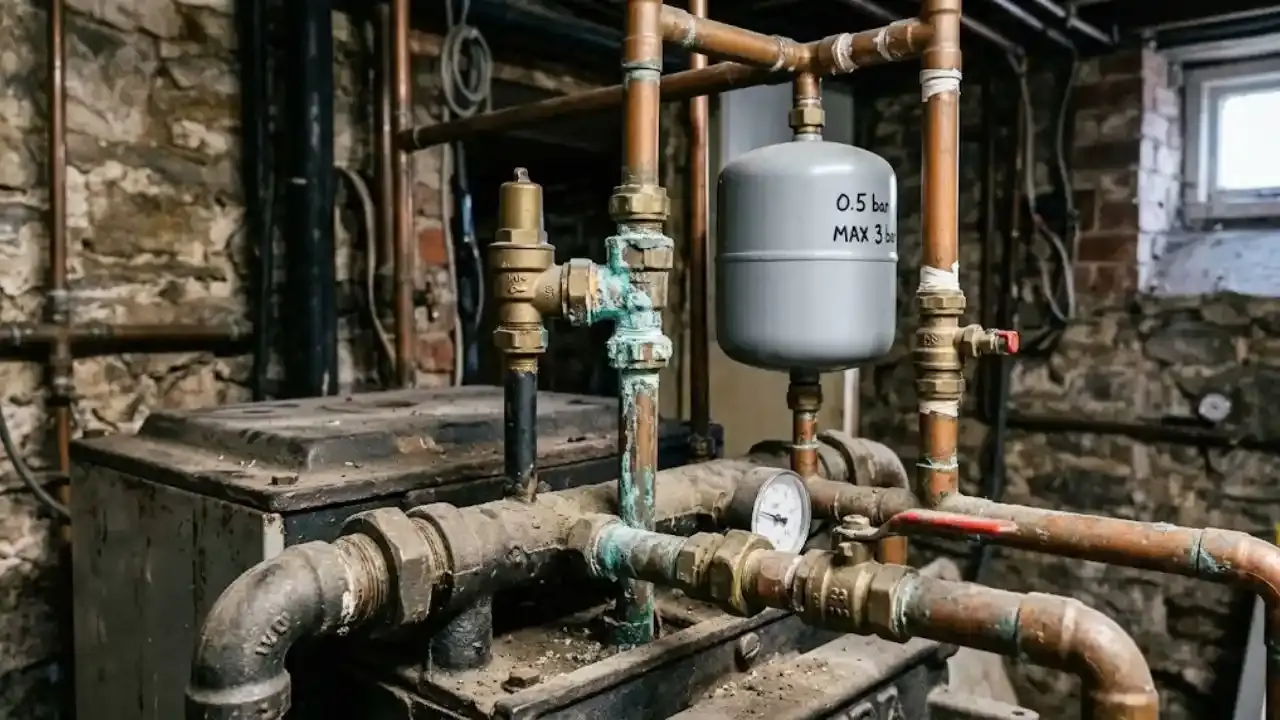
Low pressure is often a small leak or a failed expansion tank. A noisy circulator or banging pipes suggest air or a failing pump.
We repair or replace pumps, valves, thermostats and igniters. We also flush the system when sludge has built up.
Call dispatch and describe the symptoms.
Radiators and baseboard heat
Radiators that heat unevenly may need bleeding or balancing. Baseboard loops can collect air when valves are opened.
We balance the system so each room gets steady heat. Sealed leaks at valves are a regular quick fix.
Safety and combustion
A gas boiler needs clean combustion and a clear flue. A damaged flue can release carbon monoxide into the home.
Install a carbon monoxide alarm near the boiler room and sleeping areas. We check venting and combustion on each visit.
Maintenance for Lake County winters
A yearly service before the heating season catches most failures. Bleed radiators, check pressure and test the safety valve.
Our water heater work and boiler work often go together in older basements, and we plan both to keep your system reliable.
Reading the pressure gauge and the thermostat
Many hot water boilers read around 12 to 15 pounds of pressure when cold, though the label on your unit is the rule. A reading near zero means water has been lost, and a reading that climbs toward the relief valve rating means the expansion tank may not be doing its job.
Check that the thermostat is set to heat and that fresh batteries are in it. Many no-heat calls end with a dead thermostat battery, and we are glad to say so.
Steam boilers and older systems
Some older homes in Waukegan and Zion still have steam boilers. They need the right water level, clean gauges and working vents on each radiator.
Steam systems fail differently than hot water systems, with banging pipes, uneven heat and water hammer. We service both, and we tell you which you have before we start.
A homeowner checklist before you call
- Confirm the thermostat is set to heat and has fresh batteries.
- Check that the boiler power switch and the gas valve are on.
- Look at the pressure gauge and write down the reading.
- Note any error code or blinking light on the control panel.
Those four items let dispatch tell you quickly whether the problem is simple or needs a visit.
What affects the price of boiler repair
Boiler repairs depend on the part and the age of the system.
- Failed partPumps and valves vary in price.
- System ageOlder boilers may need hard-to-find parts.
- AccessTight boiler rooms add time.
- SeasonWinter emergency calls carry an after-hours rate.
Insurance seldom pays for a worn boiler, but a sudden leak that damages property may be covered.
Standards we follow: Work follows the Illinois Plumbing Code (77 Ill. Adm. Code 890), and Illinois requires a plumbing license under 225 ILCS 320. Gas connections and venting also follow NFPA 54, the National Fuel Gas Code, and the manufacturer instructions. Illinois also requires carbon monoxide alarms in homes under the Carbon Monoxide Alarm Detector Act (430 ILCS 135).
Want your real number? Describe the problem when you call, and we will explain what the visit involves before any work starts.