
Emergency Leak Detection in Waukegan, IL
A leak you can see is only part of the story. Water behind a wall, under a slab or in the yard can run for weeks before the stain appears, and by then the damage is far larger than the pipe.
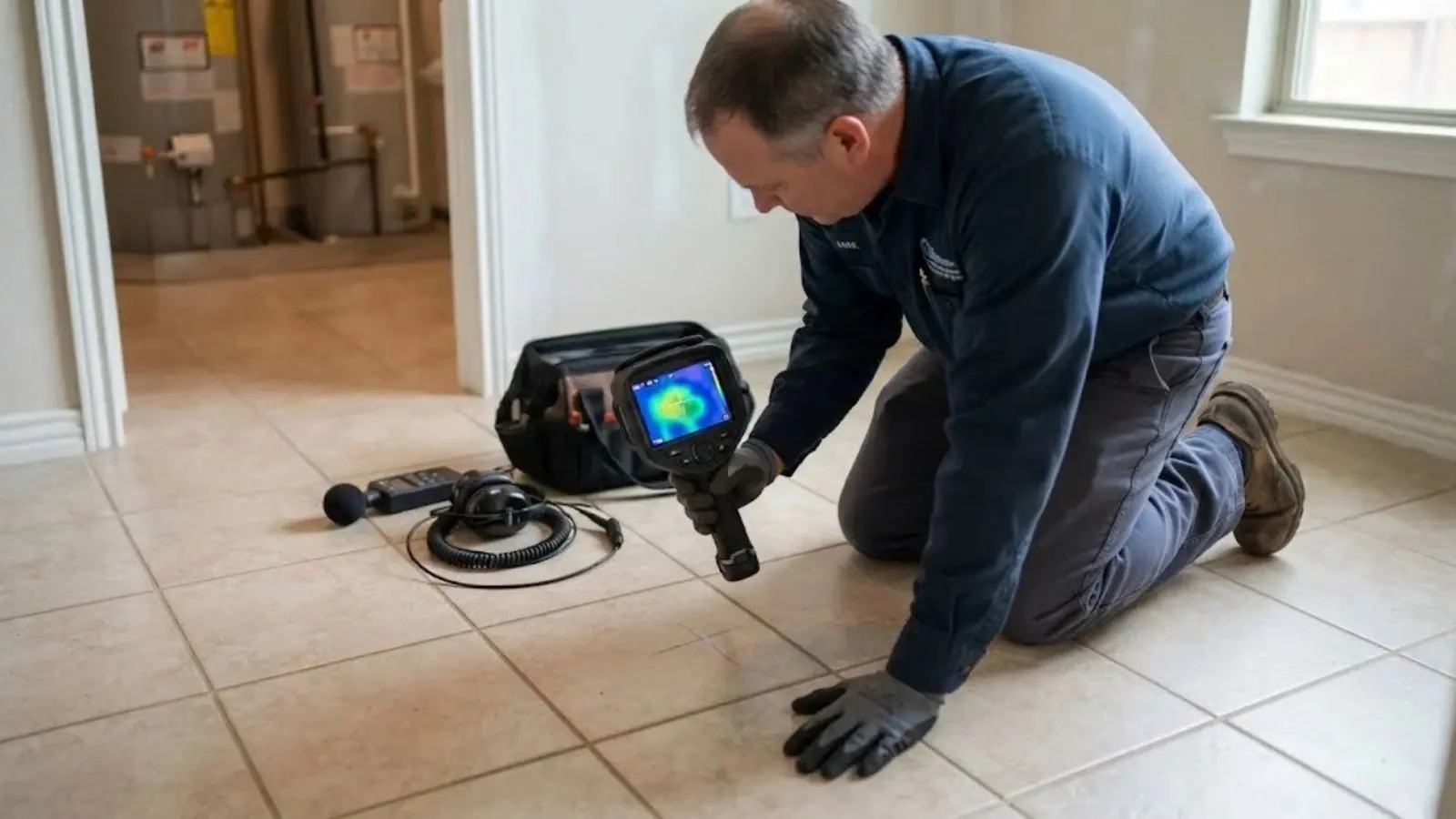
If water is actively running, shut off the main valve and call our 24/7 line. We use listening gear, moisture meters and thermal imaging to find the source, then fix it through burst pipe repair or targeted line work.
Leak detection questions, answered first
We combine a pressure test, acoustic listening, moisture readings and thermal imaging. These pinpoint the spot so we open only a small section of wall or floor.
Signs include a water bill that climbs without a change in habits, a meter that moves when all fixtures are off, damp or warm floors, musty smells and the sound of running water in a quiet house.
Active water damage, a ceiling stain that is growing, or water pooling near electrical items is an emergency. A tiny drip can be scheduled but still deserves a prompt visit.
Yes. We use the meter to tell whether a leak is inside or outside the house, and whether it is on the supply side. A moving meter with everything off is a clear sign of a leak.
Many homeowner policies cover detection when a covered loss occurs. Policies differ, so ask your insurer and keep records of the visit.
What to do when you suspect a leak
Find your main shutoff valve, usually near where the water line enters the basement, and test it before you need it.
- Turn off every fixture and appliance that uses water.
- Read the meter, wait twenty minutes with no water use and read it again.
- If the number moved, water is escaping somewhere.
- Shut off the main if you see active flooding, and call right away.
Water meter and high bill diagnosis
Many leak calls begin with a bill that jumped. A running toilet, a dripping outdoor faucet and a failed irrigation valve are common causes, and none show up on the ceiling.
We start at the meter and work backward. If the meter moves with everything off, the leak is somewhere on your side, and we trace it with pressure tests and listening gear.
Call dispatch. We find the leak first and give you a clear price before work starts.
Slab and under-floor leaks
Homes built on concrete slabs hide supply lines beneath the floor. A leak there can warm a patch of tile or raise the water bill with no visible stain.
We pinpoint the leak from above with acoustic and thermal tools. Once located, we discuss options such as a spot repair or rerouting a line, and the choice may lead to repiping when pipes are failing in several places.
Ceilings, walls and crawlspaces
A brown ring on a ceiling often traces to a supply line, a drain or a shower pan one floor up. Wall moisture can come from a pinhole in copper or a loose fitting.
In crawlspaces and basements, we look at joints, valves and drain lines. We also check whether the moisture is from plumbing or from groundwater, which is why basement waterproofing sometimes enters the conversation.
Outdoor and irrigation leaks
Soggy lawn patches and a drop in water pressure can mean a leak in the service line between the meter and the house. Underground leaks are common where lines are old.
A failed water line needs a clear diagnosis before digging, and our locating tools reduce the area that must be opened. We also check hose bibs and irrigation backflow devices.
Why local housing matters
About half of Waukegan homes were built before 1970, and Gurnee and Libertyville add many mid-century and later homes. Galvanized steel, early copper and older fittings are all in play across that range.
Older galvanized pipe corrodes from the inside and can leak at threads. We note the pipe type during every visit so you can plan ahead.
What affects the price of leak detection
Detection prices depend on how hard the leak is to find and how much of the system we must test.
- Size of the systemA small apartment is quicker than a large house with several floors.
- Type of leakA supply leak under a slab takes more equipment than a visible drip.
- AccessFinished walls and floors slow the work.
- Repair afterwardsDetection and repair are quoted separately, so you decide at each step.
Insurers may pay for detection when a covered water loss occurs. Document stains with photos and keep any bills that rose.
Standards we follow: Work follows the Illinois Plumbing Code (77 Ill. Adm. Code 890), and Illinois requires a plumbing license under 225 ILCS 320.
Want your real number? Describe the problem when you call, and we will explain what the visit involves before any work starts.
Find the leak before it finds your ceiling
Call the 24/7 line for a licensed, insured plumber.
Call (847) 281-8626