
Basement Waterproofing in Waukegan, IL
A damp basement is more than a nuisance. It breeds mold, ruins storage and hints at drainage problems that grow over time. We look at where the water is coming from and recommend the simplest fix that works.
Our approach starts with plumbing basics, then moves to drainage and a sump pump. For structural cracks, we advise bringing in a foundation specialist when that is the right call.
Basement water questions answered first
Common sources are surface water near the foundation, groundwater rising through the floor, cracks in walls and failed plumbing. We check each, starting with the pipes.
Our focus is plumbing and drainage. If a wall is bowing or cracking badly, we tell you honestly and suggest a structural specialist.
If water gathers beneath the slab, a sump pit and pump are part of most dry-basement systems. We size and place it for your home.
Yes. Downspouts that dump at the foundation cause many wet basements. Extending them and grading away from the house is cheap and often effective.
Drier air helps prevent mold, but existing mold needs cleaning. We handle the plumbing side and advise on drying.
Start with the simple causes
Before any digging, we look at gutters, downspouts, grading and plumbing leaks. A leaking supply line or a failing drain can imitate a foundation problem.
We use moisture meters and, where needed, leak detection to rule out pipes. That step saves money when the cause is simple.
Interior drainage systems
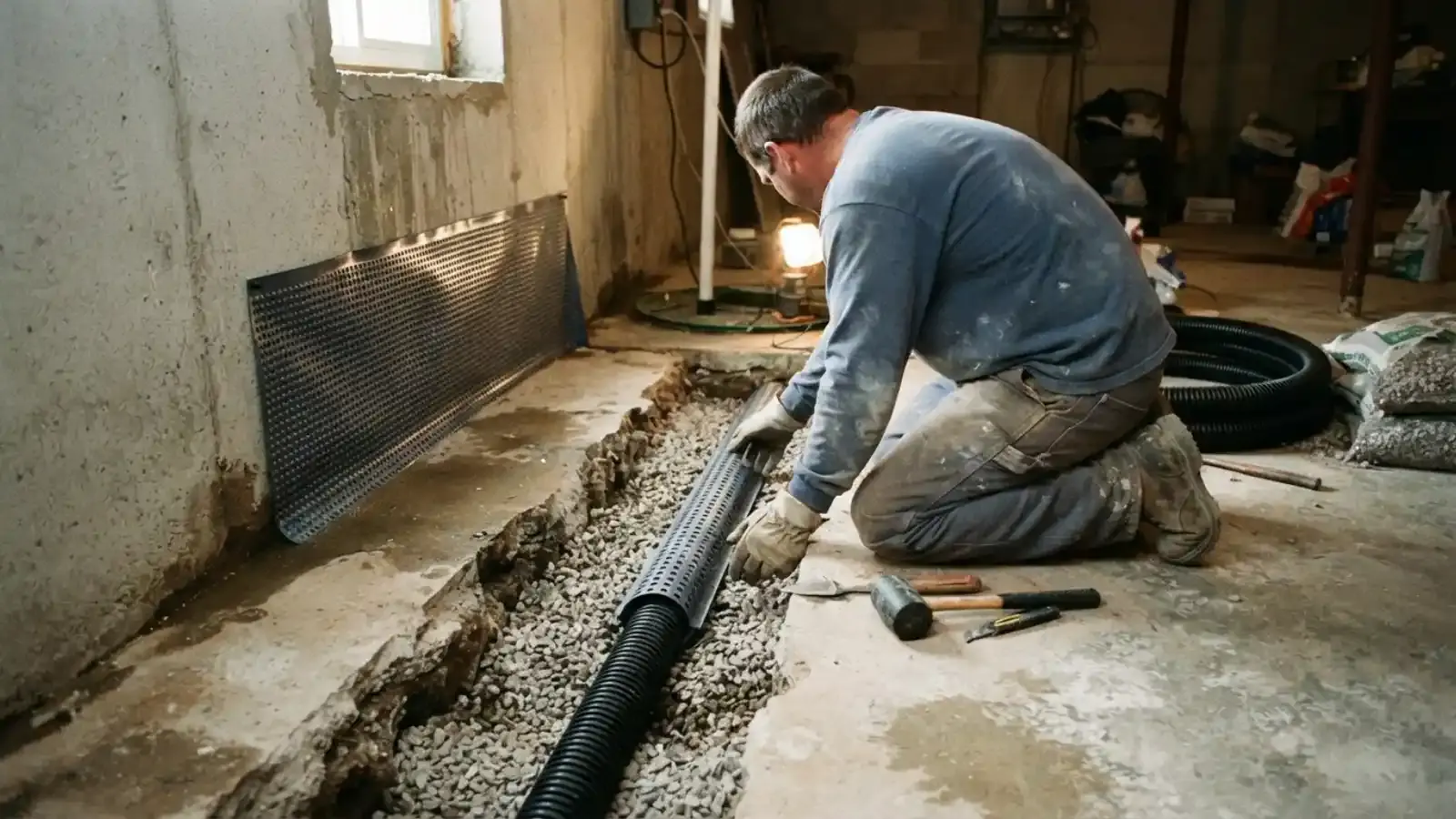
An interior drain tile runs along the footing and carries water to a sump pit. The pump moves the water out of the house.
This approach manages water that reaches the foundation rather than trying to stop it outside. It suits many older Waukegan homes with block or poured foundations.
Call to book a visit. We give a clear price before work starts.
Floor drains and backups
Floor drains connect to the sewer, and they can bring sewage up when the line is overloaded. A backwater valve can prevent that.
We check floor drains and traps, and we clear blockages with drain cleaning. A trap that dries out can also let sewer gas into the basement.
Lakefront, clay soil and storm history
Lake County has heavy clay soil in many areas, which holds water near foundations. The July 2017 storm showed how quickly water can build, with 3.6 to 5.5 inches in two days around Waukegan.
Homes in low areas near the Des Plaines River in Gurnee and Libertyville face different risks than lakefront homes. We tailor advice to your location.
Keeping a dry basement dry
Test the sump pump each spring, clean gutters and keep soil sloped away from the walls. Run a dehumidifier in summer.
If you finish the basement, use materials that tolerate moisture and keep access to the sump pit and main cleanout.
What to do about a finished basement
Finished walls hide moisture. If drywall is soft, paint is bubbling or carpet smells musty, open a small section to see what is behind it.
We can check pipes and drains without tearing out the whole room. If groundwater is the cause, plan the drainage first and the finishes second, so you do not rebuild a wall that will get wet again.
Humidity, condensation and the dehumidifier
Not every damp basement leaks. In summer, warm air meets cold concrete and water condenses on walls, pipes and floors.
A dehumidifier with a drain hose, insulated cold water pipes and a sealed sump lid cut condensation. We separate leaks from condensation so you fix the real problem.
What affects the price of basement waterproofing
Prices depend on how much of the basement needs treatment and what the source is.
- Source of the waterA leaking pipe is cheaper to fix than a drainage system.
- Length of drain tileMore perimeter means more work.
- Pump and backupDual pumps and backups add equipment.
- Finished spaceFinished basements need more careful access and restoration.
Seepage and groundwater are generally excluded from standard policies. A sudden plumbing failure may be covered.
Standards we follow: Work follows the Illinois Plumbing Code (77 Ill. Adm. Code 890), and Illinois requires a plumbing license under 225 ILCS 320.
Want your real number? Describe the problem when you call, and we will explain what the visit involves before any work starts.
A drier basement, planned properly
Licensed, insured plumbers serve Waukegan and nearby towns.
Call (847) 281-8626