
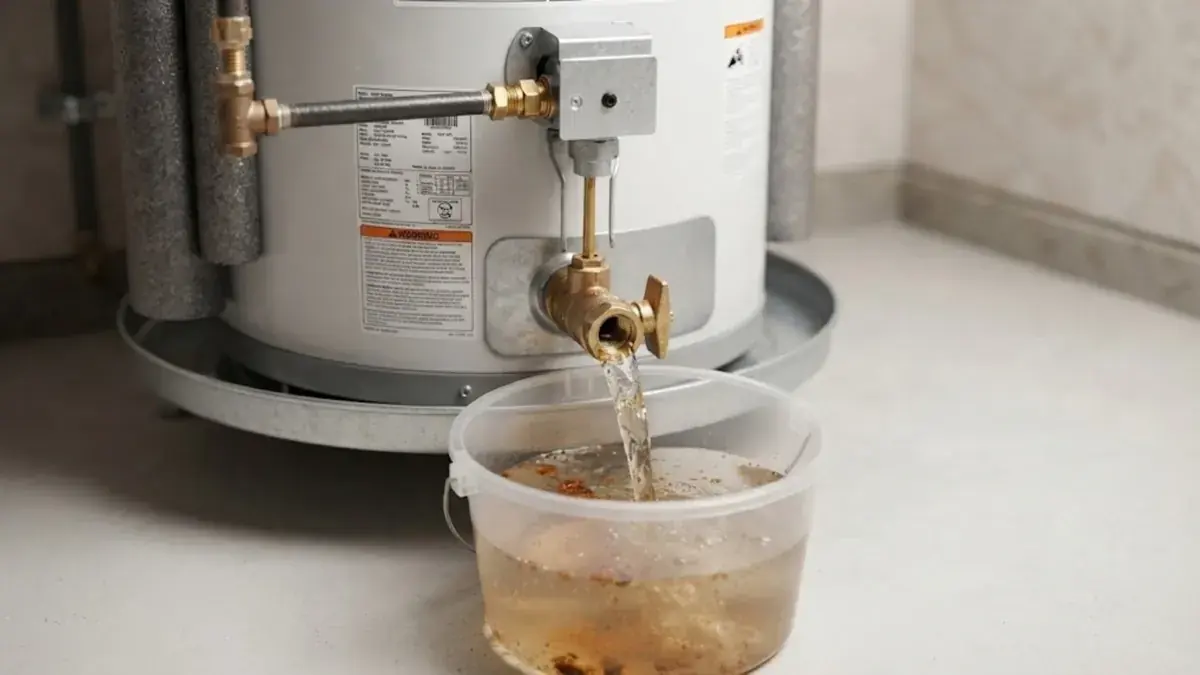
Tankless Water Heater Leaking From the Bottom in Waukegan, IL
Water on the floor under a tankless unit is a sign to act. The cause may be a loose fitting or a condensate drain, and it may be a cracked heat exchanger.
Shut off the water and the gas or power, then use this guide to sort out the likely cause. For service, see water heater repair.
Shut it down first
Turn off the cold water to the unit, switch off the power and close the gas valve. A leaking gas heater should not run until it is checked.
Place a towel or a pan under the leak and note where the water appears. That detail helps the plumber find the cause.
Loose or failed fittings
The most common leak is at a connection on the bottom of the unit. Isolation valves, unions and flex connectors can loosen with vibration or wear.
Tightening a fitting may fix it. If a gasket or a washer has failed, replace it, and do not over-tighten.
Shut off water, gas and power and call.
Condensate from high-efficiency units
Condensing tankless heaters produce acidic water from the exhaust. It drains through a tube into a neutralizer or a drain. A clogged tube makes the unit overflow.
Clean the condensate line and the trap. If the neutralizer is full, replace the media.
Scale and a failed heat exchanger
Mineral scale can crack the heat exchanger over time, especially if the unit has not been descaled. A cracked exchanger leaks and cannot be repaired.
Hard water makes this more likely. Descaling once a year prevents many failures.
Pressure relief valve leaks
A relief valve that drips may be reacting to high pressure or thermal expansion. A weak valve may need replacement.
Checking for an expansion tank is a good step, and our plumbers test house pressure with a gauge.
What a repair visit involves
We find the source, repair or replace the part and test the unit. If the exchanger has failed, we explain replacement options.
A clear price comes before work starts. Same-day service is available when the schedule allows.
How to tell water from condensate
Condensate from a high-efficiency unit is slightly acidic and often has a faint smell. Fresh water from a fitting is odorless and may drip steadily while the unit is running.
Dry the area, then wait and watch. A drip only when the burner runs points to condensate or a vent issue, and a constant drip points to a fitting or a relief valve.
When the leak is the exchanger
If you see water coming from the heat exchanger area, or the unit shuts down with an error code, the exchanger may have failed. Scale and freezing are the main causes.
Freezing can crack a unit installed in an unheated space. If your unit sits in a garage or an exterior closet, mention that, because it changes the diagnosis.
What a plumber can often fix on the spot
Loose fittings, failed washers, clogged condensate lines and weeping relief valves are common and fixable in one visit. We carry the parts that fail most often on the truck.
A failed exchanger is a bigger decision. We compare the cost of a new exchanger with a new unit and recommend what makes sense for your home.
Preventing the next leak
Descale the unit yearly, check the condensate line each season and keep the vent clear. Install isolation valves if the unit has none, because they make service simple.
If your unit is exposed to freezing, add insulation or move it. A few simple steps protect an expensive appliance.
Questions to ask before replacing the unit
Ask what failed, whether the part is still available and what the warranty covers. Ask for a price on repair and on replacement, and ask how long each takes.
If you decide to replace, ask whether the new unit can use the existing vent and gas line. That affects the cost and the time.
Why gas and power should stay off
A leaking unit can short out electronics and corrode the burner. Running it with a leak can also damage the heat exchanger or the venting.
Leave it off until a plumber has looked at it. If you smell gas at any point, leave the house and call the gas utility or 911 from outside before you call us.
Keeping a record for warranty and resale
Note the date, the symptoms, the error codes and what you did. Photograph the leak and the label with the serial number.
A clear record helps with a warranty claim and shows a future buyer that the unit was cared for. Keep service receipts in one folder.
Waukegan water reports and scale
The City of Waukegan publishes annual Consumer Confidence Reports on its website, and Waukegan draws its water from Lake Michigan through its own plant. We could not confirm a hardness figure from a primary source, so we recommend reading the latest report or testing your tap.
Scale decides how often a tankless unit needs descaling. Our crews also serve Gurnee, where the supply agency lists about 8 grains per gallon, so plan a yearly flush there. Standards we follow: repairs follow the manufacturer instructions, the Illinois Plumbing Code (77 Ill. Adm. Code 890) and NFPA 54, the National Fuel Gas Code.
Tankless leak questions
It can be if gas or electricity is involved. Shut off water, gas and power, and call. Do not run the unit.
No. A cracked exchanger needs replacement. We explain whether to replace the part or the unit.
It may be the relief valve or the condensate line. A plumber can tell which in minutes.
Check the manufacturer terms. Scale damage is often excluded.