
Sump Pump Installation Cost in Waukegan, IL: What Drives the Price
Asking what a sump pump costs is like asking what a car costs. The answer depends on the model, the work around it and how much protection you want.
This guide lists the factors that move the price so you can compare quotes. If you are ready to plan, our sump pump page explains what we install and how we quote.
The pump itself
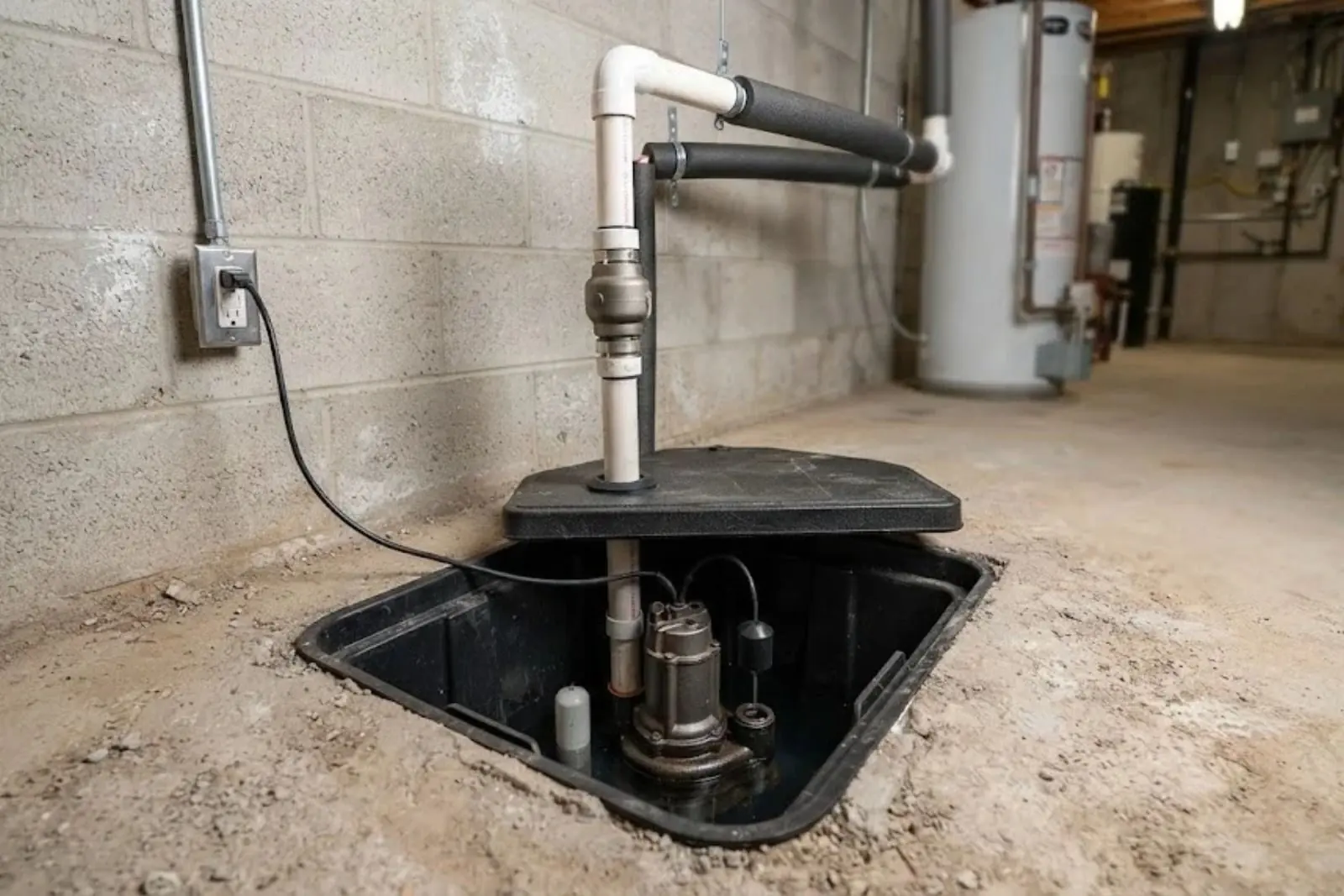
Submersible pumps sit inside the pit and run quietly. Cast iron models handle heat well and last longer, and plastic models cost less.
Horsepower matters too. A smaller pump is fine for a low-volume pit, while a larger one is better where water enters quickly.
The pit and the basket
If there is a pit already, the install may be a swap. If not, a pit must be cut in the floor, which adds labor and concrete work.
A good pit has a basket or liner, a gravel base and a lid. The lid keeps out debris and reduces humidity in the basement.
Call for a clear price before work starts.
Discharge piping and where the water goes
The pump needs a pipe to carry water outside. Longer runs, buried lines and a trip through a finished wall add time and materials.
The discharge should end away from the foundation. A check valve keeps water from flowing back into the pit, and an outdoor grate prevents ice blocks.
Backup power and alarms
Storms often cut power, and that is when you most need a pump. A battery backup or a water-powered unit adds protection.
A high-water alarm adds another layer. These extras raise the price, and they pay off the first time the grid goes down.
Electrical work and permits
A pump needs a grounded outlet, ideally on a GFCI circuit. If the outlet is missing, an electrician may need to add one.
Local permits and inspections may apply. We explain what your town requires and include it in the quote.
How to compare quotes fairly
Ask each contractor what is included: pump, pit, discharge, check valve, backup and permit. A cheap quote that leaves out the check valve is not a bargain.
We give a clear price before work starts, and we write down what is included. Compare line by line, not by the bottom number.
Why the cheapest pump is not always the cheapest choice
A pump that fails in its second year costs the price of the pump twice and may cost a flooded basement. Float switches fail first on bargain models, and a stuck float means no pumping at all.
Look for a pump with a vertical float or an electronic switch, a cast iron body and a warranty you understand. We explain the differences without pushing you toward the most costly option.
Cost of waiting versus cost of acting
Water in a finished basement damages drywall, flooring, furniture and stored items. A sump system is a small share of that loss, and insurance may not cover seepage or backup without a rider.
If your pump is old, noisy or running constantly, plan the swap on a dry day. We can often schedule a same-day visit when the schedule allows.
Maintenance after installation
Test the pump twice a year and clean the pit when sediment builds up. Check the discharge outlet in winter for ice or leaves.
A pump that is tested and cleaned lasts longer, and it gives you confidence during storms.
Questions to ask on the first visit
Ask how the pump will be sized and how the plumber knows the pit and the discharge will handle the flow. Ask whether the quote includes a check valve and a union, so the pump can be serviced without cutting pipe.
Ask what happens if the power fails, and what the plan is for the discharge in freezing weather. A plumber who has thought about those questions has probably thought about your basement, too.
Rentals, landlords and shared basements
If you rent, the landlord is usually responsible for the pump, and you should report a failing unit in writing. If you own a multi-unit building, a pump failure can affect several tenants at once.
We work with owners and managers on pump replacement and backup power. A written record of each service helps resolve disputes about who pays for water damage.
Local housing and why pumps work harder here
The Chicago Metropolitan Agency for Planning community snapshots show Waukegan has 33,229 housing units, with a median build year of 1967 and 18.3 percent built before 1940. Older foundations are more likely to have cracks and weeping tile that has aged.
Along the Des Plaines River, the National Weather Service reported a preliminary crest of 12.09 feet at Gurnee on July 15, 2017, above the 1986 record of 11.95 feet. Homes in Gurnee and Libertyville near the river should treat a backup pump as part of the system. Safety steps: do not stand in water near outlets, and call your electric utility or 911 if water reaches the panel. Standards we follow: the Illinois Plumbing Code (77 Ill. Adm. Code 890) and the National Electrical Code (NFPA 70).
Sump pump cost questions
They differ in pump type, pit work, discharge length, backup power and permits. Compare what is included, not only the total.
If your area loses power in storms, yes. A backup keeps the pit pumping when the grid fails.
You can replace a pump in an existing pit if you are careful, but new pits, piping and electrical work are best left to licensed professionals.
A swap can be done in a couple of hours. A new pit takes longer because concrete work is needed.