
Plumbing for a Garbage Disposal in Waukegan, IL: Homeowner Guide
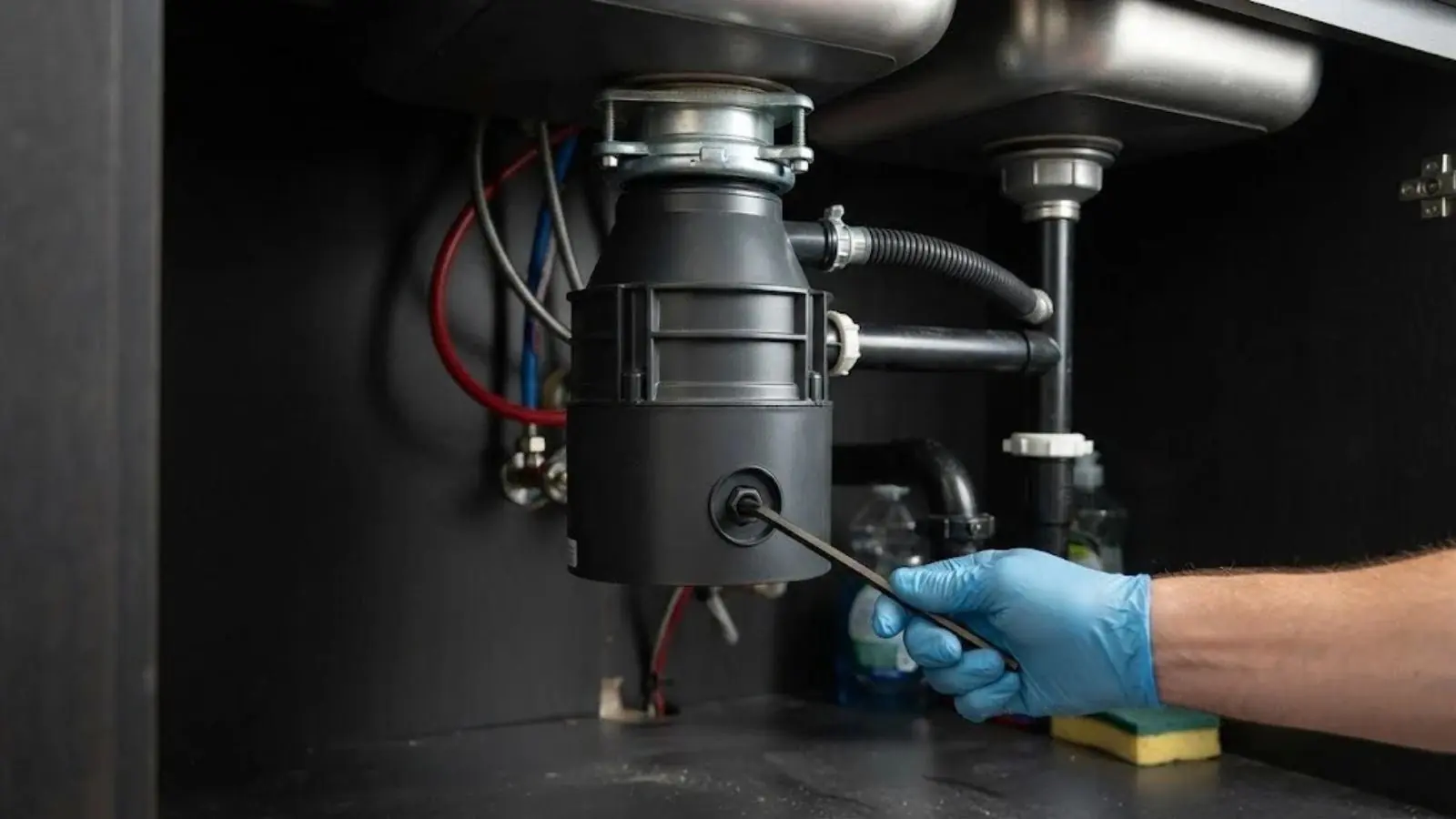
A garbage disposal looks like a single appliance, but it touches the sink, the drain trap, the dishwasher and the electrical circuit. Understanding how they connect makes it easier to spot a problem or plan an install.
This guide walks through the plumbing around a disposal. For a jam or a leak, see garbage disposal repair.
The parts of the connection
The disposal mounts under the sink flange and drops into a discharge pipe with a trap. The trap holds a small plug of water that blocks sewer gas.
The dishwasher drain hose also connects at the disposal or a nearby tailpiece. That connection is a common leak point.
Single and double sink setups
With a double sink, the disposal usually serves one basin, and the other basin connects to the same trap through a continuous waste. A clog in one can back up into the other.
If both sides back up, the clog is past the trap in the branch line. If only the disposal side backs up, check the disposal outlet first.
Call to book a visit.
The dishwasher line and the high loop
A dishwasher drain hose should rise to the underside of the countertop before it drops to the connection. That high loop helps keep dirty water from flowing back into the dishwasher.
Some jurisdictions require an air gap. Ask your local building office what applies, and have the plumber follow it.
Electrical and mounting basics
A disposal needs a switched outlet or a hardwired connection. A cord plugged into an outlet under the sink is common, and the switch is usually on the wall.
Mounting the unit tight and square prevents vibration and leaks. A loose mount causes noise and drips at the flange.
Common leaks and where they come from
- The sink flange, from old putty or a loose mount.
- The dishwasher inlet, from a cracked hose or a loose clamp.
- The discharge connection, from a worn gasket.
- The housing, from a rusted shell, which means the unit has failed.
We trace the source and replace the part, or the unit, as needed.
Care that keeps the line clear
Grease is the main enemy of the kitchen drain. Wipe pans into the trash and flush the disposal with cold water for a few seconds after use.
If the kitchen sink keeps backing up, the main line may be coated with grease, and hydro jetting cleans the whole pipe wall.
Sizing and choosing a disposal
Disposals are rated by horsepower, from about one-third to one horsepower. A larger motor grinds tougher scraps and jams less often, and it costs more.
Think about how you cook. A household that cooks from scratch benefits from a stronger unit, and a household that rarely cooks can use a basic one. Continuous-feed models start when the switch is on, and batch-feed models start when a stopper is turned.
What an install visit includes
We disconnect the old unit, clean the sink flange and set the new mount. We connect the discharge, the dishwasher inlet and the electrical, then test for leaks and noise.
We also check the trap and the arm of the drain, since a partial clog downstream will overload a new disposal. Cleaning that line while the sink is open costs little.
Septic and sewer differences
On a septic system, a disposal adds solids, so the tank needs pumping more often. Ask your septic professional before you add one.
On a public sewer, the main concern is grease. Kitchen drains still clog, and a disposal does not change that, so habits matter as much as hardware.
Questions to ask a plumber about the sink
Ask whether the trap and the drain arm are in good shape, whether the sink is sized for the unit and whether the dishwasher line is routed correctly. Ask what is included in the price.
A short answer to each question tells you how careful the installer is.
Common installation mistakes to avoid
- Leaving the dishwasher knockout plug in place, so the dishwasher cannot drain.
- Skipping plumber putty or a gasket under the flange.
- Over-tightening the mounting ring, which cracks parts.
- Connecting the discharge without a proper trap.
Each mistake causes a leak or a backup within days. A careful installer checks them all before leaving.
Noise, vibration and sink material
Stainless steel sinks amplify noise, and a disposal that is not mounted well rattles the whole sink. Sound insulation and a snug mount reduce it.
Granite and composite sinks have different mounting needs. Tell the installer what your sink is made of, and ask for a mount that fits it.
Licensing and renters in Waukegan
Illinois requires a license to install or alter plumbing under the Plumbing License Law, 225 ILCS 320, with a narrow exemption for an owner or lessee who occupies a single-family residence. The Illinois Department of Public Health runs a license verification lookup.
About half of Waukegan households rent, according to the CMAP community snapshot, so many residents should contact the landlord before touching the disposal. We work for owners and managers alike, and we serve Gurnee and Park City too.
Garbage disposal plumbing questions
Ask the landlord first. In a multi-unit building, a licensed plumber should do the work.
Requirements vary by locality. We follow what the local code requires and tell you what applies.
Many dishwashers connect there so the disposal can chop food waste. A knockout plug inside the disposal must be removed on a new install.
A clog in the shared trap or branch line sends water to the other side. Clearing the line usually fixes both.