
Plumber in the Near North Historic District, Waukegan, IL
The Near North Historic District is a mostly residential part of Waukegan, just north of downtown. It is listed on the National Register of Historic Places, and its buildings date from the 1840s to 1928.
If you live in an older home here and a drain is backing up, a pipe is leaking or the hot water has stopped, call and describe what you see. This page explains how plumbing in an older house is usually approached and what to do first.
Near North at a glance
Facts come from the National Register record for the district (reference 78001162) and the Waukegan Historical Society. The edges are approximate, so use your own street address to judge whether this page fits.
First steps in an older house
Find the main shutoff
In an older house the main valve may sit in a basement corner or crawl space. Turn it slowly, because an old valve can stick. If it will not close fully, tell the plumber.
Stop using the drain
If a sink or tub is backing up, stop running water. More water only pushes the problem further into the house.
Photograph the damage
Take clear photos of wet areas and of the label on the water heater. They help with repairs and with any insurance claim.
Write down what changed
Note when the problem began and any recent remodeling. Older houses often have additions and updates from different decades, so that history helps.
What a house from the 1840s to 1928 means for plumbing
The district grew north from downtown Waukegan through the 19th and early 20th centuries. Its houses show many styles, and Greek Revival and Italianate are especially common. A house that has stood for a century has usually been worked on more than once.
That matters for plumbing in a simple way. Pipes, drains and fixtures in one house can come from different decades. Nobody can say what is inside your walls from the street, and this page does not claim to know. A plumber has to look, and a camera or a short visit often settles the question.
Across the whole city, 18.3 percent of Waukegan homes were built before 1940, according to the CMAP community snapshot built on 2020 to 2024 census data. Near North sits at the older end of that range. Age alone is not a defect, but it is a good reason to ask questions before work begins.
Questions worth asking before any work starts
- What material is the water line where it enters the house?
- Has the main sewer line ever been inspected with a camera?
- Where does each basement drain lead, and is there a cleanout?
- Does the main shutoff close fully, and has it been turned recently?
- Does this repair need a city permit, and who applies for it?
- What is the price for the visit before work starts?
A good answer names what the plumber actually saw, not what is typical for old houses.
Call and describe what you see. Ask for the price before any work starts.
Historic listing and plumbing work
The National Park Service says National Register listing places no restrictions on what a private owner does with their own property. State and local preservation rules can still apply, and they are separate from the listing.
If a repair would change the outside of the house, such as a new roof vent or a dig in the front yard for a sewer line, call the City of Waukegan first and ask. Plumbing permits follow the Illinois Plumbing Code, 77 Ill. Adm. Code 890, and the Illinois Plumbing License Law, 225 ILCS 320.
Services that suit an older home
These are general descriptions, not a prediction of what your house needs.
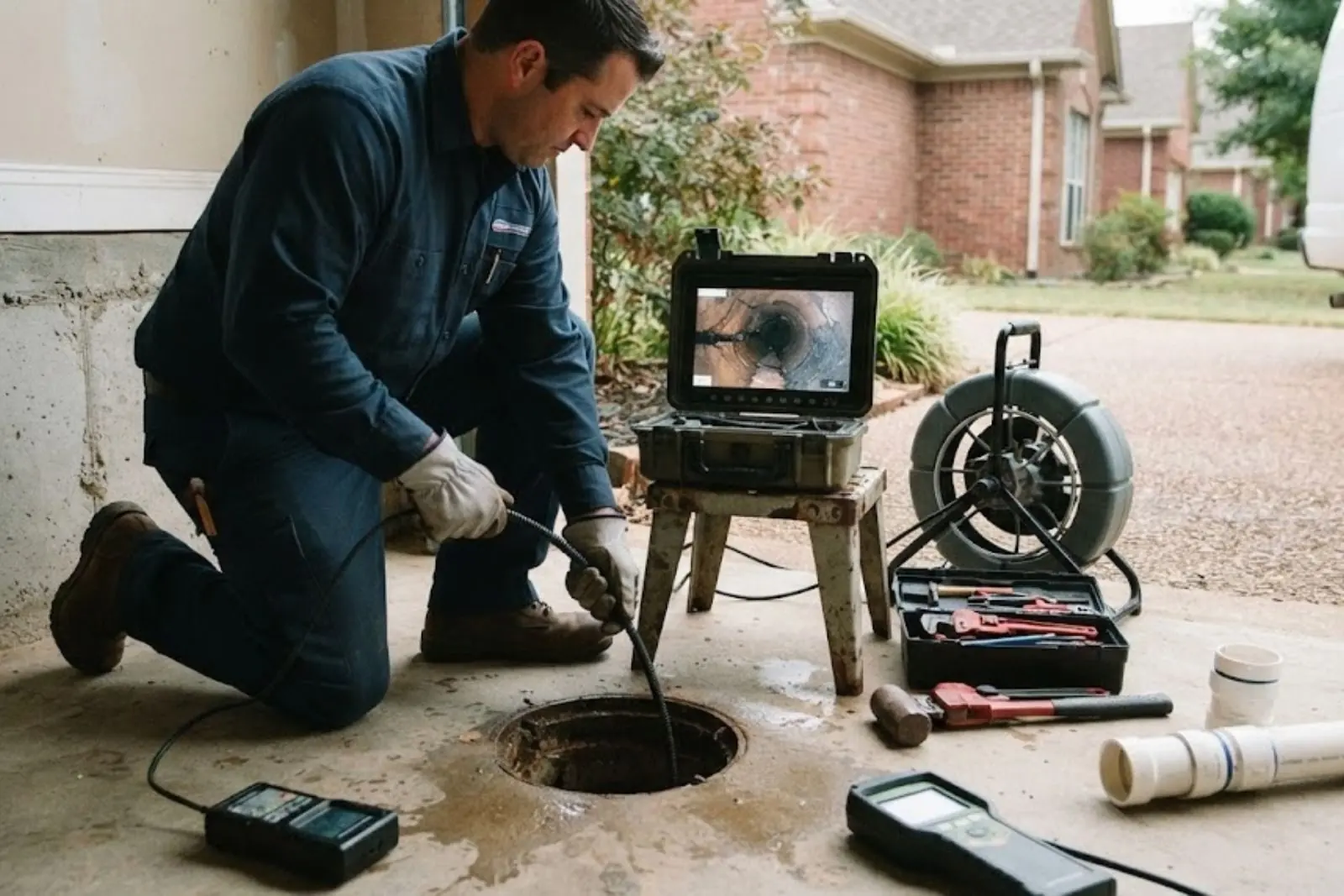
- Sewer camera inspection shows the real condition of an old drain line before anyone digs.
- Drain cleaning clears slow sinks, tubs and floor drains.
- Leak detection narrows down a hidden leak so less plaster and trim is disturbed.
- Water heater replacement covers a tank that has reached the end of its life.
- Repiping is a bigger job and makes sense only after a plumber has seen worn pipes or repeated leaks.
Where Near North sits in Waukegan
The district lies north of the downtown core. For plumbing in the blocks around Washington Street and the county buildings, see downtown Waukegan. For the whole city, start at the Waukegan plumbing home page or browse all plumbing services.
Near North plumbing questions
The district is listed as roughly bounded by Ash Street, the railroad tracks and Glen Flora Avenue. Those edges are approximate. Give your street address when you call and the plumber can tell you whether the visit fits.
No. Age alone is not a reason to replace anything. Many old houses run well with repairs. Repiping makes sense when a plumber finds worn pipes, repeated leaks or poor water flow, so ask what was seen and why.
National Register listing does not by itself restrict private owners, according to the National Park Service. Local or state rules can exist separately, so ask the City of Waukegan about permits and any change to the outside of the house.
In many cases the area can be narrowed down first with non-invasive tools, which helps protect plaster and trim. Ask how the plumber plans to locate the leak before any cutting starts.
Your street address, what you see, where the main shutoff is and whether water is spreading. If water is spreading, shut off the main first and then call.
Near North Historic District, Waukegan
The district sits north of downtown Waukegan. Use the map to see where your street falls against the Ash Street and Glen Flora Avenue edges.
Near North plumbing question?
Tell the plumber your street, the problem and the age of the house.
Call (847) 281-8626