
How to Waterproof a Basement in Waukegan, IL
A wet basement rarely has a single cause. The fix starts with the cheap steps outside and moves inward, so you do not pay for drain tile when a downspout is the real problem.
This guide follows that order. For help with the plumbing side, our basement waterproofing page explains how we approach it.
Step one: find where the water enters
Dry the walls and floor with a towel, tape a square of plastic to the wall and wait a day or two. Moisture under the plastic comes through the wall, and moisture on top is condensation from humid air.
Note whether water appears after rain or all the time, and whether it comes at the wall base, the floor crack or a floor drain. Those details guide the fix.
Step two: gutters, downspouts and grading
Gutters clogged with leaves spill water at the foundation. Downspouts that end near the wall put thousands of gallons per storm against the foundation.
- Clean the gutters before spring and fall.
- Extend downspouts at least several feet from the wall.
- Regrade the soil so it slopes away from the house.
- Fill cracks in nearby walkways and driveways.
These steps cost little and solve more wet basements than people expect.
Call and describe where the water enters.
Step three: rule out plumbing
A leaking supply line, a failing water heater or a dripping condensate line can mimic seepage. A meter that moves with all fixtures off is a clue.
We use leak detection tools to confirm or rule out pipes before recommending anything else. It is a quick step that avoids a costly mistake.
Step four: interior drains and a sump pit
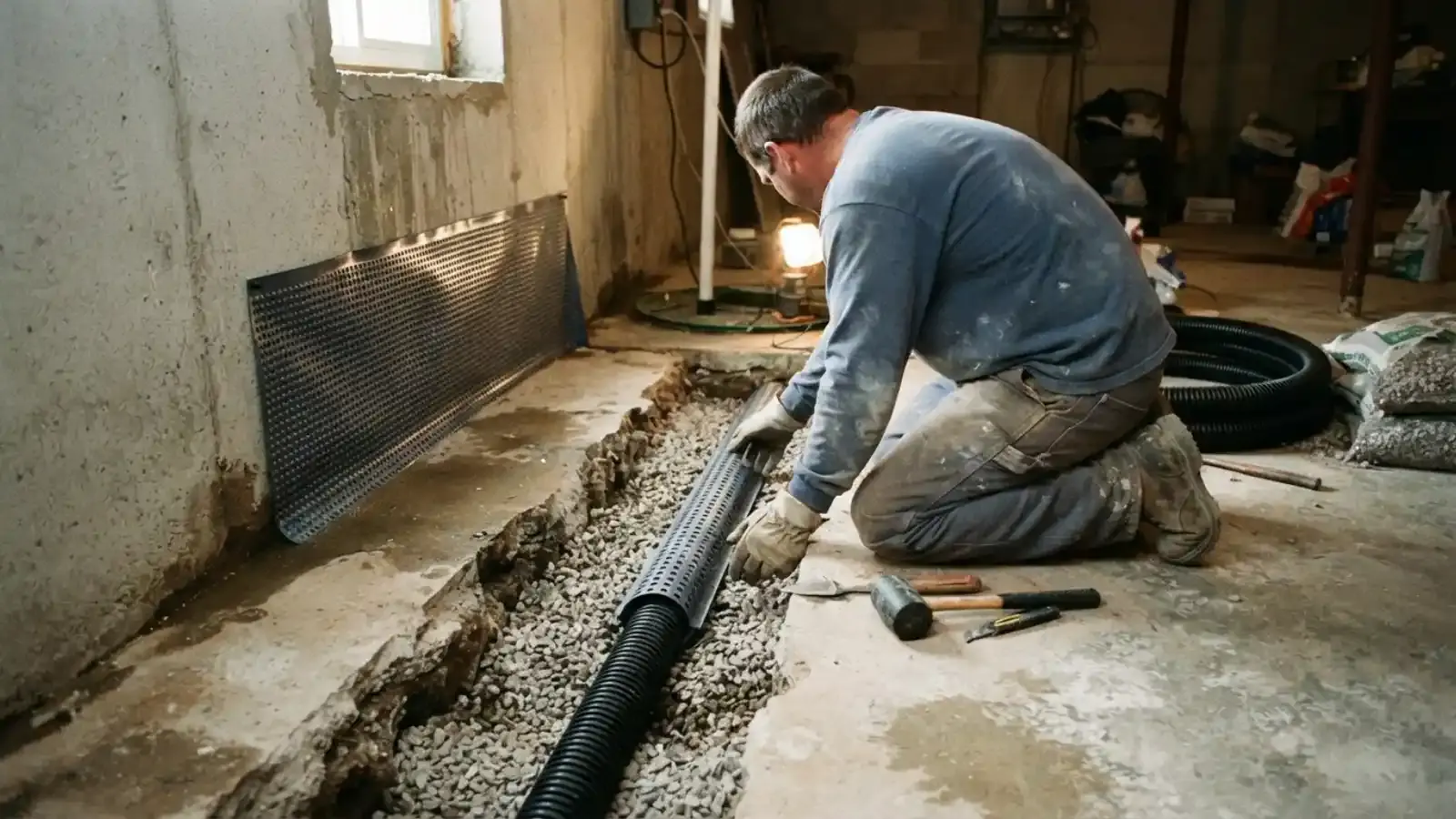
If water enters at the wall base or through the floor, an interior drain tile along the footing carries it to a sump pit. A pump then sends it outside.
This system manages water that reaches the foundation. It suits many older homes and does not require digging outside the house.
Step five: crack sealing and coatings
Sealing a single crack can help, but sealing alone rarely holds back pressure from groundwater. Paints and coatings can slow dampness but do not stop a flow.
Treat them as finishing steps, not as the main fix. Water that has nowhere to go will find another path.
Backup power and long-term care
The best system fails when the power goes out. A battery backup or a water-powered backup protects against storm outages.
Test the pump each spring by pouring a bucket of water in the pit. Keep the discharge clear, and check sump pump service if the pump is noisy or old.
What to expect from each fix, in order
Gutter and grading work usually costs the least and takes a weekend. It solves problems caused by surface water and tells you what is left.
Interior drain tile and a sump system are larger jobs, measured in days. Crack injection and coatings are small jobs, but they work only as part of a plan. Ask each contractor which problem each step is meant to solve.
Questions to ask a waterproofing contractor
Ask whether the contractor is licensed for the plumbing and electrical parts of the job. Ask what the warranty covers, whether it transfers to a buyer and what you must do to keep it valid.
Ask about the discharge, too. A pump that sends water to the foot of a neighbor slope, or into the sanitary sewer, creates new trouble. A contractor who answers clearly is easy to trust.
Seasonal checklist for a dry basement
- Spring: test the sump pump and clean the pit.
- Summer: run a dehumidifier and check for condensation.
- Fall: clean gutters and extend downspouts.
- Winter: clear the discharge outlet and watch for ice.
Doing these simple tasks each year protects the investment you made in waterproofing.
Why a patchwork approach often fails
People often hire one contractor for a crack, another for a pump and a third for paint, and nobody takes responsibility for the whole system. Water follows the path of least resistance and shows up somewhere new.
Ask one trusted professional to look at the whole picture, from the gutters to the drains. A plan with a clear order of steps costs less over time than a series of quick fixes.
Mold, odors and what to do about them
A musty smell means moisture has been present for some time. Fix the water source first, then clean or remove the affected materials.
Wear gloves and a mask, and do not paint over mold. For a large area, a mold specialist can test and clean it, and we handle the plumbing and drainage side.
What the 2017 storm showed Waukegan homeowners
The National Weather Service in Chicago documented the July 11 to 13, 2017 storm. Two-day rainfall totals included 5.53 inches at Waukegan 2E, 4.68 inches at Waukegan 2N, 3.63 inches at Waukegan and 3.54 inches at Zion, with 7.22 inches at Gurnee 2W.
Totals like these overwhelm marginal drainage. If your basement stayed dry only by luck in 2017, treat that storm as a test. We serve Gurnee and Beach Park as well, where water tables run high in wet years. Standards we follow: pump piping and drains follow the Illinois Plumbing Code (77 Ill. Adm. Code 890), and pump circuits follow the National Electrical Code (NFPA 70).
Basement waterproofing questions
You can handle gutters, grading and minor sealing. Interior drain tile and sump systems involve plumbing and electrical work that should be done by licensed professionals.
Waterproofing paint can reduce dampness but does not stop flowing water or hydrostatic pressure. It is a cosmetic step at best.
Water on the floor after rain, a high water table or a pit already in the floor all suggest one. We check how often water enters and size the pump.
A drier basement lowers the risk, but mold already present needs cleaning. Use a dehumidifier in summer.