
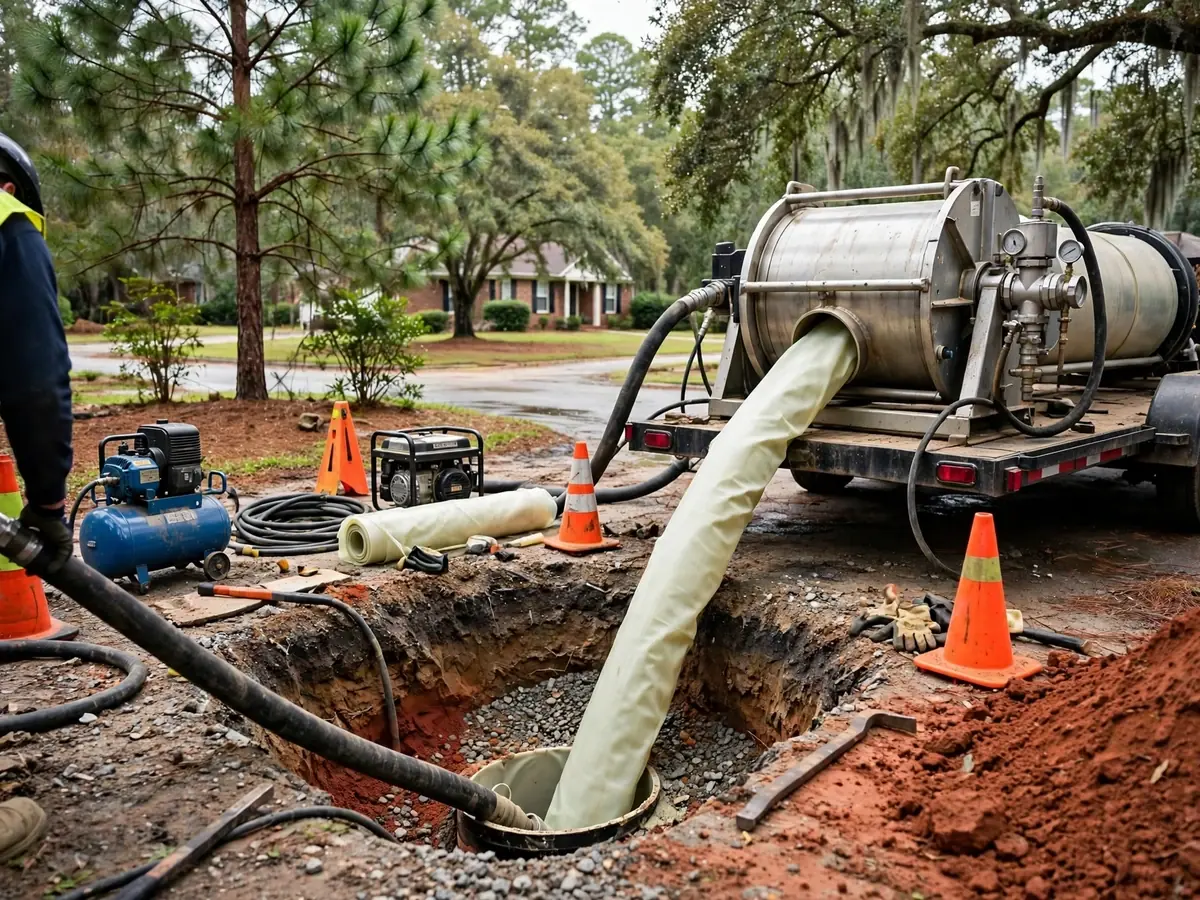
CIPP Pipe Lining for Waukegan, IL Homes: How It Works
Cured-in-place pipe lining, often called CIPP, repairs a damaged pipe from the inside. A resin-soaked liner goes into the old pipe and hardens into a new pipe within it.
This guide explains how it works and when it fits. If you suspect a failing line, begin with a sewer camera inspection.
How CIPP works
A felt tube soaked in resin is pulled or inverted into the old pipe. It is inflated and cured with hot water, steam or light until it hardens.
The result is a smooth pipe inside the old one. It seals cracks and joints and blocks roots.
What it can fix
- Cracks and small breaks.
- Open joints that let roots in.
- Pitting and corrosion in old pipe.
- Pipe in places that are costly to dig, such as under a driveway.
It does not fix a collapsed pipe or a major belly, which need excavation.
Call for a camera inspection and a plan.
Pressure lining versus sewer lining
Most lining in homes is done on gravity sewer and drain lines. Lining of pressurized water pipes is a different, specialized process used rarely in houses.
If your problem is a supply line, repiping or a service line replacement is usually the answer. See water line repair and repiping.
Steps in a lining job
We clean the pipe, run a camera and measure. The liner is installed and cured, and the camera confirms the result.
Branch lines and cleanouts are reopened. The whole job often takes a day.
Limits and questions to ask
Ask about the liner material, the warranty and the diameter loss. The liner reduces the pipe diameter slightly, which is fine for most homes.
Also ask who inspects and how permits are handled. A good installer answers clearly.
Lining or open trench?
Lining saves landscaping and driveways, and it can cost more or less than digging depending on the job. A collapsed or deeply offset pipe needs excavation.
We compare both and tell you what we would do. A clear price comes before work starts.
Materials and warranties to compare
Liners are made of felt or fiberglass with epoxy or polyester resins. Ask which one is proposed, what the thickness is and what the warranty says.
Ask also how the installer seals the ends and reopens the branch connections. These details decide how long the liner performs.
Preparing the pipe before lining
The pipe must be cleaned of scale, roots and debris, and it must be clear for the full run. Heavy roots are cut out first, and standing water is controlled.
A good installer runs a camera before and after. You should see both videos, and the second shows the result.
Costs and when lining pays off
Lining often costs less than a full excavation when the line is long, deep or under hard surfaces. It may cost more than a short spot repair in an open yard.
We compare options for your pipe and give a clear price. The best choice is the one that fits the damage, the site and your plans for the property.
What lining does not replace
A liner will not fix a broken connection to the public main or a collapsed section of soil-filled pipe. It also does not add capacity to an undersized pipe.
If the camera shows those conditions, an open repair or a replacement is the honest answer. We say so plainly.
Aftercare for a lined pipe
A lined pipe works like any other, with one difference. Avoid aggressive mechanical cleaning that can cut the liner, and tell any plumber that the line has been lined.
Keep the record of the lining, the camera video and the warranty. It helps with a home sale and with any future service.
How lining fits into a home sale
A lined sewer lateral can be a selling point if the paperwork is complete. Buyers and their inspectors like to see the before and after video, the liner specification and the warranty.
If you are buying a home with a lined pipe, ask for the same records. A missing record is not a reason to walk away, but it is a reason to run a fresh camera and confirm the pipe is in good shape.
Trees, roots and the long term
A liner stops roots from entering the pipe, but the tree still wants water. Roots can press on the outside of a liner or enter at the ends if they are not sealed well.
If a large tree stands over the line, ask the installer how the ends and the connections will be sealed. A short camera check every few years confirms the liner is holding.
Older sewer laterals in Waukegan and Zion
CMAP data show 18.3 percent of Waukegan homes were built before 1940 and 35.5 percent between 1940 and 1969. Zion shows 17.9 percent and 30.8 percent in the same periods.
Clay tile and cast iron laterals from those decades can crack and take in roots, which makes them candidates for lining when the pipe is still intact. Our crews serve Zion and Libertyville, and a camera look decides whether lining is possible. Standards we follow: liner installation is judged against the Illinois Plumbing Code (77 Ill. Adm. Code 890) and the manufacturer specification, and local permits may apply.
Pipe lining questions
Manufacturers cite long service lives. Actual life depends on installation and conditions, and we explain the warranty.
Not every pipe. A collapsed or heavily offset pipe cannot be lined. A camera look shows what is possible.
It seals joints and cracks where roots enter, so roots stop entering. Roots outside the pipe may still grow nearby.
It may be required locally. We tell you what applies.
Repair the pipe without the big dig
Licensed, insured plumbers, clear price before work starts.
Call (847) 281-8626