
Boiler Heat Exchanger Repair in Waukegan, IL: Homeowner Guide
The heat exchanger is the part of a boiler that moves heat from the flame to your system water. When it fails, you may have leaks, poor heat and a safety risk.
This guide explains the signs and choices. For a general boiler problem, see boiler repair.
What a heat exchanger does
The burner heats the exchanger, and system water passes through it to carry heat to the radiators. The exchanger is built to take high temperatures and thermal stress.
Over the years, scale, corrosion and thermal cycling can crack or clog it.
Signs of trouble
- Water on the floor under the boiler.
- Rapid pressure loss with no visible leak.
- Soot, rust or a smell of exhaust.
- Banging or kettle noises from scale.
- Uneven heat or frequent shutdowns.
A cracked exchanger can allow combustion gases to escape, so treat these signs seriously.
Call and describe what you see.
Carbon monoxide safety
If your carbon monoxide alarm sounds, leave the house and call 911. Do not restart the boiler.
Never ignore soot or a strange smell near the unit. Alarms near the boiler room and bedrooms are inexpensive protection.
Clogged versus cracked
A clogged exchanger from scale or sludge may be cleaned. A flush with a cleaner can restore flow in some cases.
A cracked exchanger usually cannot be repaired safely. Replacement of the exchanger or the whole boiler is the common answer.
Repair or replace the boiler
If the boiler is old, the cost of a new exchanger may approach the cost of a new unit. A newer boiler is more efficient and has a warranty.
We lay out both options and the price, and we say plainly which we would choose in your place.
Care that extends boiler life
Service the boiler yearly, treat the water as the manufacturer advises and bleed radiators to remove air. Keep an eye on system pressure.
A little care prevents most failures, and it keeps the house warm through winter.
Cost drivers for a heat exchanger repair
The part itself is the largest cost, followed by labor and system flushing. Access matters, because boilers in tight closets are harder to open.
Some boilers have a replaceable exchanger, and others are built as one sealed unit. We check the model and explain the numbers before we start.
How a flush and treatment help
Sludge in an old hot water system can coat the exchanger and cut heat transfer. A power flush removes much of it, and a treatment helps prevent a repeat.
We test the water, flush the system and set the pressure. This often restores heat that owners thought was lost to old age.
When replacement is the better value
If the boiler is old, has had several repairs or burns inefficiently, a new unit may pay off in lower fuel bills and fewer calls. A new boiler also carries a warranty.
We give you both numbers and an honest opinion. You make the decision with the facts.
Carbon monoxide alarms and annual checks
Put an alarm in the boiler room and near bedrooms, and test it monthly. Replace it on the schedule printed on the label.
A yearly service checks combustion, the flue and the controls. It is the best defense against a cracked exchanger going unnoticed.
Questions to ask before approving a repair
Ask what failed, how the plumber confirmed it and whether the part is a repair or a replacement. Ask for the price of both a repair and a new boiler.
Also ask about the warranty on parts and labor, and about the age of the other major parts. An honest answer helps you decide with confidence.
What a service visit checks
A technician looks at the flame color, the flue, the heat exchanger surfaces, the pressure and the safety controls. A steady blue flame and a clean exchanger are good signs, while yellow flame, soot or rust flakes are warnings.
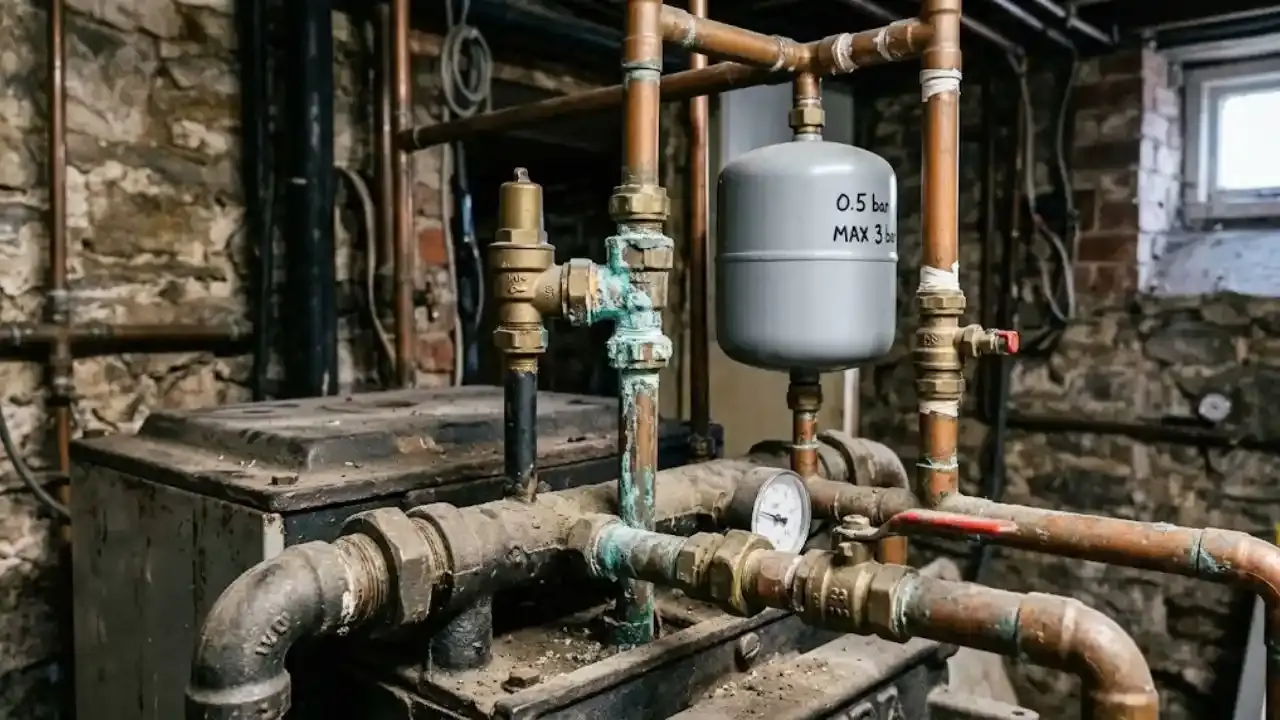
We also test the relief valve, the expansion tank and the circulator. A short, regular visit costs far less than an emergency in January, and it gives you a record of the boiler health year after year.
Fuel type and what it changes
Gas, oil and electric boilers fail in different ways. Gas units suffer from scale and flue problems, oil units from soot and nozzle wear, and electric units from failed elements.
Tell dispatch which fuel your boiler uses and the brand on the label. We bring the parts and the combustion tools that match, which saves a second trip.
Older housing and boiler heat in Waukegan
The CMAP community snapshot for Waukegan reports that 35.5 percent of homes were built between 1940 and 1969 and 18.3 percent before 1940. Hot water and steam boilers were widely used in those decades, and many are still in service.
Zion has a similar profile, with 30.8 percent built from 1940 to 1969. Our crews serve Zion and Libertyville, where older blocks may still rely on radiators, and we recommend a yearly checkup before the heating season.
Heat exchanger questions
Usually not safely. Replacement is standard, and sometimes the whole boiler.
It depends on the water and the care. Many last many years, and neglected ones fail early.
A water leak is a risk to the home, and a cracked exchanger may allow exhaust gases out. Turn off the unit and call.
Sometimes, with a flush or a cleaner. A plumber can test the flow and advise.