
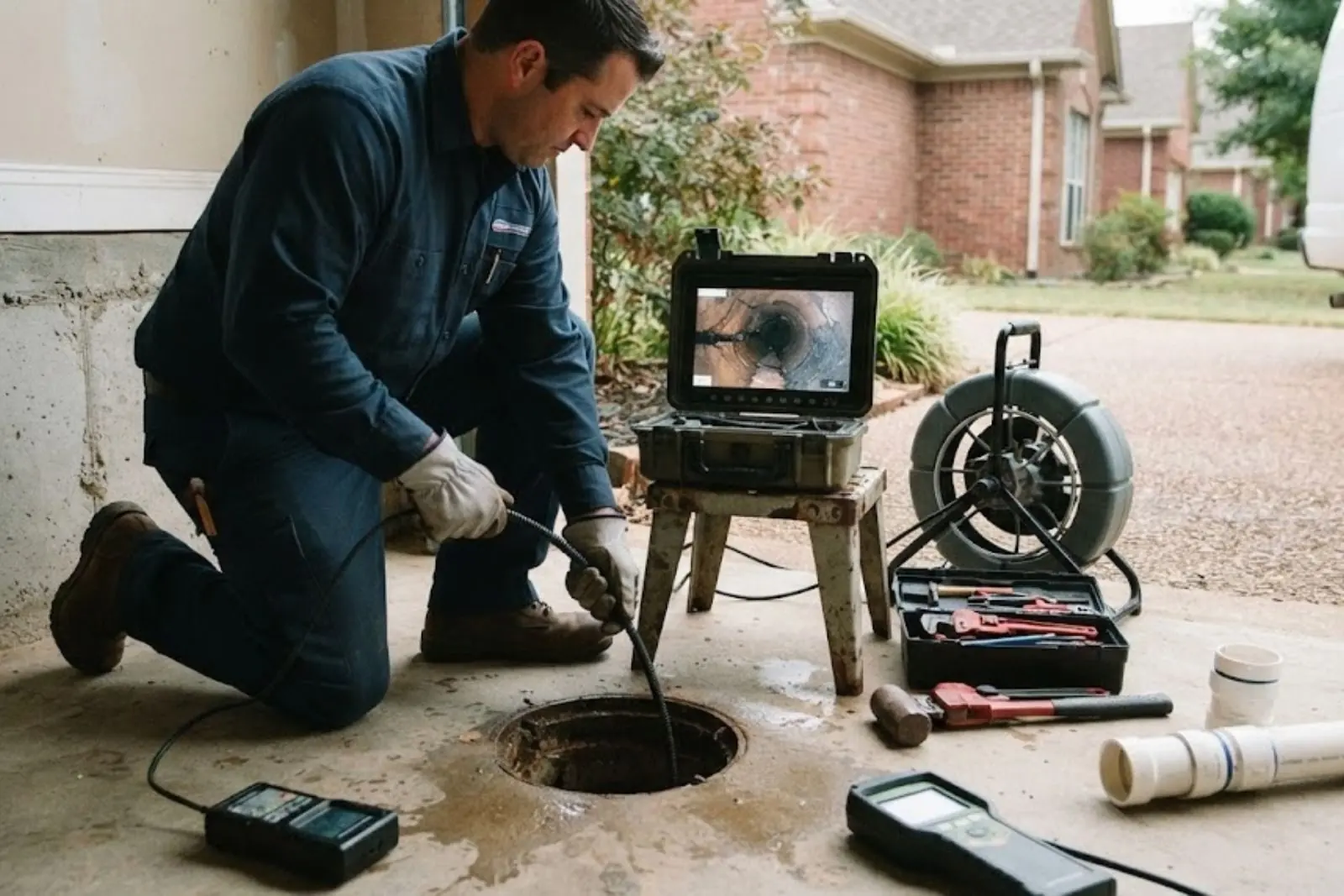
All Drains in the House Clogged: What to Do in Waukegan, IL
When every sink, tub and toilet drains slowly, the blockage is almost never in one fixture. It sits in the main line, or in the sewer lateral, and it will not clear on its own.
This guide lists what to do first and who is responsible. For urgent help, call and ask for sewer line cleaning.
Stop using water
Every flush and every load of laundry adds to the problem. Stop using water until the line is clear.
- Do not run the washer or dishwasher.
- Keep people and pets out of the basement if water appears.
- Open the main cleanout only if you know how and there is no pressure.
- Photograph any backup for your insurer.
Confirm it is the main line
Check the lowest drain in the house. If it bubbles or backs up, the main is blocked. Flushing a toilet and watching the tub is another test.
If only one bathroom is slow, the blockage may be in a branch line instead.
Stop using water and call the 24/7 line.
Common causes
Roots, grease, wipes and a collapsed pipe cause most main line blockages. In homes with old pipe, a belly or a crack gives waste a place to settle.
Heavy rain can also overload the public sewer and push water back into low basements.
What we do
We open the main cleanout, run a cable or a jetter and test the flow. A camera follows to find the cause.
When roots or damage show up, we explain options such as sewer line repair and give a clear price before work starts.
Whose pipe is it?
The homeowner generally owns the lateral from the house to the connection at the public main. The main in the street belongs to the city or the sanitary district.
If neighbors are also backing up, the street main may be blocked. Call the city, and call us for the plumbing on your side.
Preventing a repeat
Keep wipes and grease out of the drains, and schedule a camera look if the line has backed up before. Clear roots on a regular schedule if they are the cause.
A yearly check is cheaper than a weekend emergency.
What the cleanout tells us
When we open the main cleanout, the water level tells a story. If the cleanout fills with water, the blockage is downstream toward the street. If it stays dry, the blockage lies between the house and the cleanout.
That one observation tells us where to run the cable and whether the problem is on your property or beyond it.
Why a backup can come right back
If roots or a damaged section caused the blockage, clearing opens a hole in the clog but leaves the cause in place. The pipe can block again within weeks or months.
A camera after the cleaning shows the cause. We explain what it means and give you the choices, so you can plan rather than react.
Cleanup and safety after a sewage backup
Sewage contains bacteria, so wear gloves and boots, and keep children and pets out. Remove soaked porous items such as carpet and cardboard, and disinfect hard surfaces.
For a large backup, a cleanup company can dry and sanitize the area. We repair the line, and we can recommend next steps.
Preparing the house for the plumber
Clear a path to the basement, and move items away from the floor drain and the main cleanout. Have a flashlight ready and keep pets in another room.
Write down when the problem began and what you used before it happened, such as laundry or a long shower. Those clues often point to the cause.
Insurance, photos and what to save
If sewage reached the living space, take photos before any cleanup and keep a list of damaged items. Save the plumber invoice and any note about the cause.
Many policies cover sewer backup only with a rider, and the claim often depends on a documented cause. A short call to your insurer early on tells you what the policy covers and what proof it wants.
Buying or selling a home with a history of backups
Sellers should disclose known backups, and buyers should ask. A camera look at the sewer lateral before closing shows the real condition of the pipe.
If the report shows roots or a belly, the repair cost can be negotiated. A clear video is better than a promise that the problem is fixed.
Where to report a street main problem in Waukegan
The City of Waukegan runs its government from City Hall at 100 N Martin Luther King Jr. Ave. If several neighbors lose drainage at the same time, contact the city so the public main can be checked.
During the July 2017 storm, the National Weather Service recorded 3.63 inches at Waukegan over two days, enough to stress low basements. The same applies in Gurnee and Park City, and our emergency line stays open during storms. Standards we follow: sewer work in Illinois falls under the Illinois Plumbing Code (77 Ill. Adm. Code 890), and licensed plumbers carry it out.
All drains clogged questions
Yes, because the main line is blocked and sewage can back up into the house. Stop using water and call.
It will not help if the main is blocked. A plunger only works on a local clog.
Only if you have a water or sewer backup rider. Check your policy and keep photos.
Many main line clearings take a couple of hours. We tell you what we see after the first pass.